
Booking a union venue doesn’t necessarily mean giving up your preferred AV team. But it can change who does the work, how your crew is staffed and what you’ll ultimately spend on production. How much it changes depends on the venue and how it handles production labor.
We’ve produced union shows in San Diego, Detroit, DC and Las Vegas, and the rules haven’t been the same from one venue to the next. Some have been straightforward to work with, while others added crew positions, scheduling restrictions, and costs that weren’t in the initial budget. Here’s what you need to know before signing a venue contract.
Your AV Team May Look a Little Different
You may still be able to bring your own production team into a union venue, but there are often rules about which roles your people can fill once they’re onsite. At some venues, that means shadow positions, where a union technician is paired with each operator you bring in. In practice, you can end up paying two people to cover one job.
Depending on the venue, the most cost-effective approach may be to bring the people who know your meeting best, like your production manager, content manager or a specialty operator, and have local union crew fill the other positions. You avoid duplicating the entire crew, and your own team stays in charge of how the show runs.
Look Beyond the Hourly Labor Rate
Union labor rates are usually significantly higher than at non-union venues, and the hourly number isn’t always the full cost. Labor can also include parking, health benefits and retirement contributions, which add up quickly over a multi-day event.
Depending on the venue and the production requirements, additional costs may include:
- Teamsters: Labor to load, unload and handle equipment at the dock.
- Shadow operators: Union technicians paired with members of your team who are working the show.
- Rigging: Union labor and charges for installing anything hung overhead.
- Electrical services: Venue electricians, power connections and rules about whether your production company can run power from the distro.
- Other labor positions: Supervisors, stewards, contractors or IT technicians for specific tasks.
These are costs you want to understand before the budget is finalized, and a couple of questions can tell you a lot. Ask whether your production company can run power from a single connection or whether the venue will require its own electricians. Then ask who’s allowed to unload your trucks. If everything has to go through the venue’s dock crew, plan for that labor from the start.
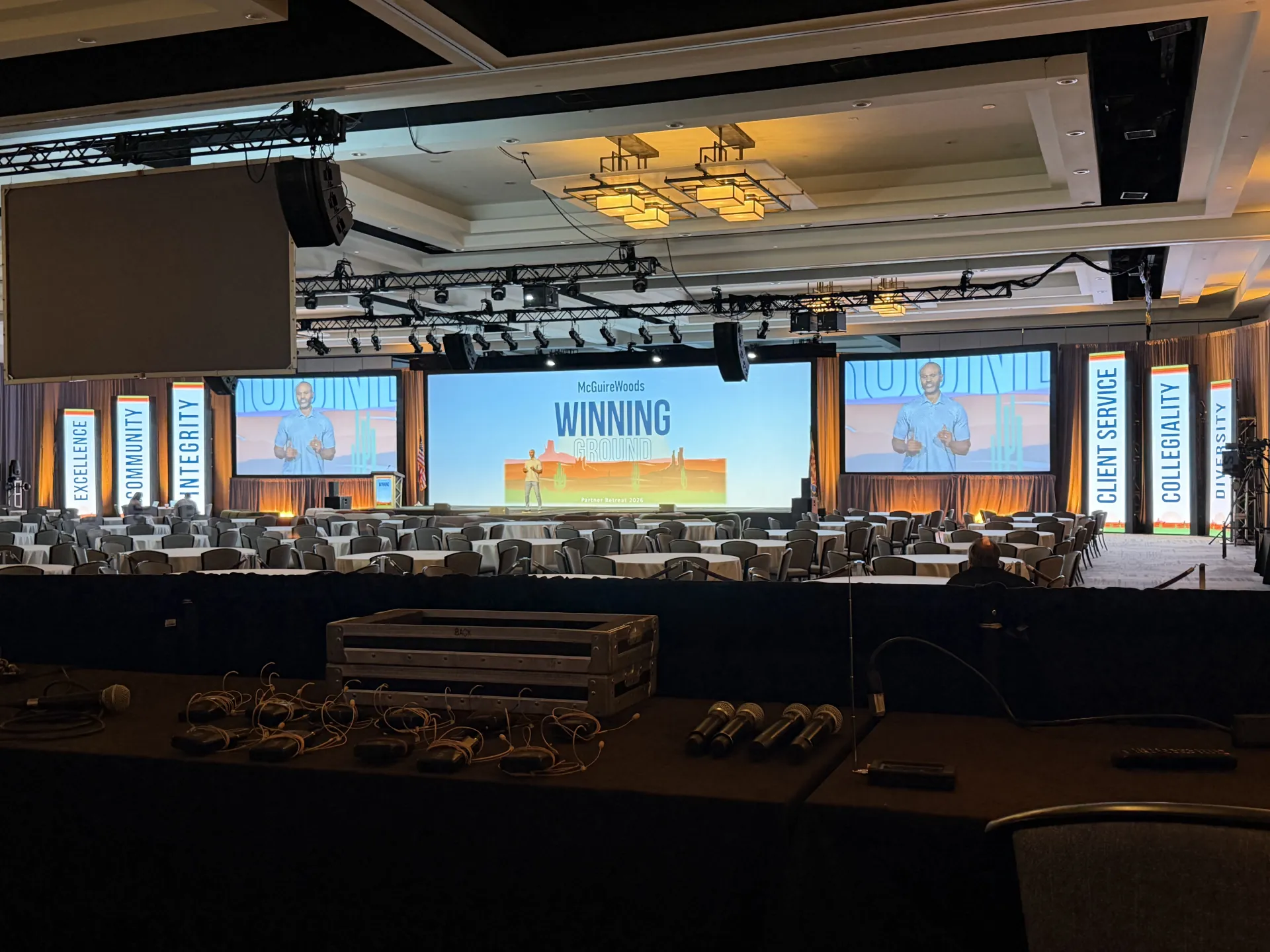
The Schedule Has to Account for the Rules, Too
Union rules also affect how long the work takes. Required breaks can compress the time you actually have for load-in, set and strike, and small requests can take longer than you’d expect. In a non-union venue, if a room needs another table, someone grabs one from the back hallway. In a union building, that table may have to be moved by a specific union hand, and the request can take longer. We’d rather build those realities into the schedule during planning than uncover them during load-in, when they turn into delays and costs nobody budgeted for.
Not Every Union Venue Works the Same Way
We’ve also worked with union crews who went above and beyond. At the San Diego Convention Center, the labor was skilled, hardworking and knew how to move gear around the building and to and from the dock efficiently. Rates were reasonable and the crew was a pleasure to work with. We’d happily go back and work with them again.
Venues in other cities have each worked differently for us, so we learn the rules at every venue before planning a show, union or not. Knowing those rules early makes it easier to work with the union instead of against it, and it tells us which roles need to be staffed locally. From there, we can decide who from your regular team should travel with the event.
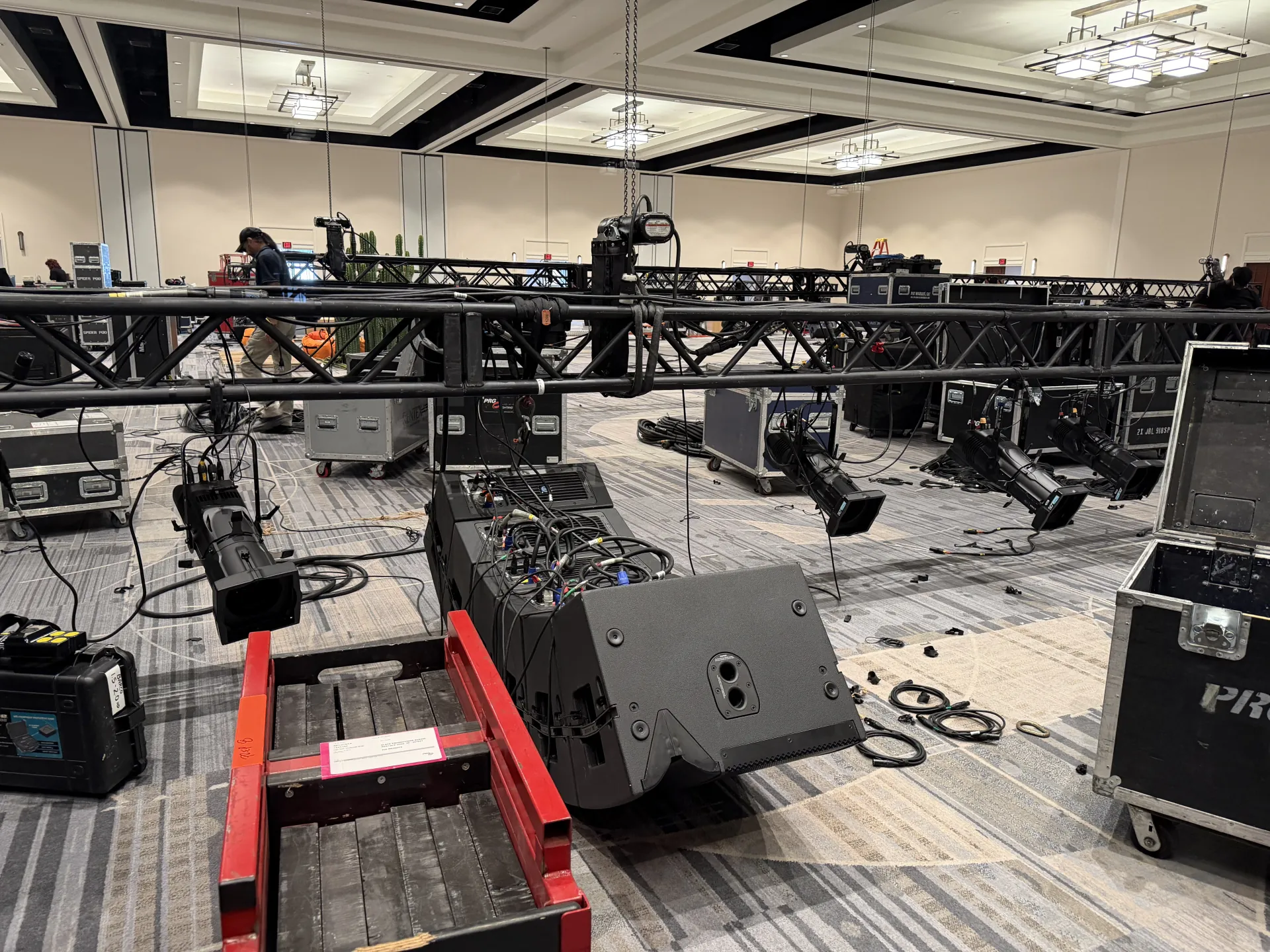
Get Your Production Team Involved Before You Sign
Union rules are much easier to plan around before you’ve signed the venue contract. Bring us in at that stage, and we’ll help you understand what the venue requires for labor, rigging and power, and how that affects your schedule and budget. That way, those costs are already in the production plan and proposal when you review them.
We can manage union crews wherever we work, but we still have to follow the venue’s rules, the same as everyone else on the show.
Planning an event at a union venue? Talk with Slate before you commit. We’ll help you understand the production requirements and what they mean for your event.
Frequently Asked Questions About Union Venues
Can I bring my own AV company to a union venue?
Often, yes. However, the venue may restrict which tasks outside crews can perform or require additional union personnel. Review the venue’s specific labor requirements before making plans.
What is a shadow position in event production?
A shadow position is a union employee assigned alongside an outside production operator, as required by certain venues. These requirements can create additional labor costs when bringing in your own AV team.
Are union venues always more expensive for AV?
Not always. Some venues have skilled, efficient local crews with reasonable rates. Others have higher labor costs, additional required positions or scheduling rules that affect the budget. The total depends on the venue and your production needs.
Do union venues require Teamsters for load-in and load-out?
Some do. Teamsters may be required to unload trucks, move equipment or handle dock operations. Ask what labor is required and how those services are charged.
Can Slate manage production at a union venue?
Yes. Slate can manage union labor teams, coordinate production responsibilities and help clients plan around venue requirements. Depending on the location, we may bring department leads, a production manager, a content manager or other specialists while working with local union crews.
When should I ask about union labor requirements?
Ideally, before signing the venue contract. Knowing the labor requirements early gives you a more accurate picture of the costs, staffing and production options available.