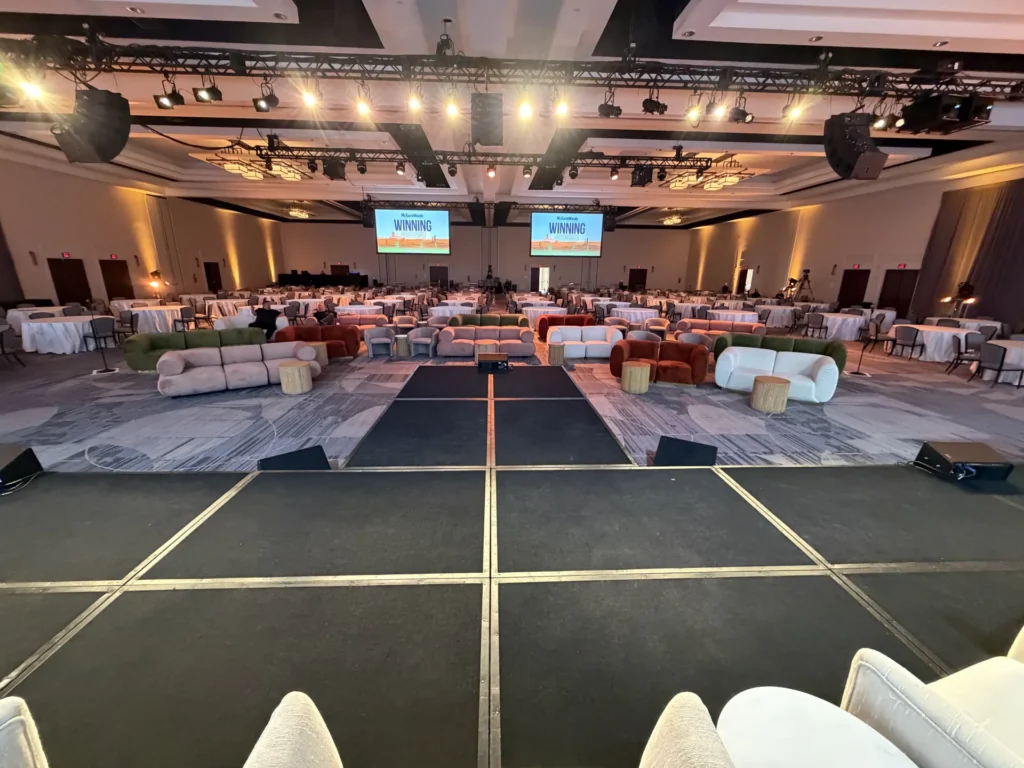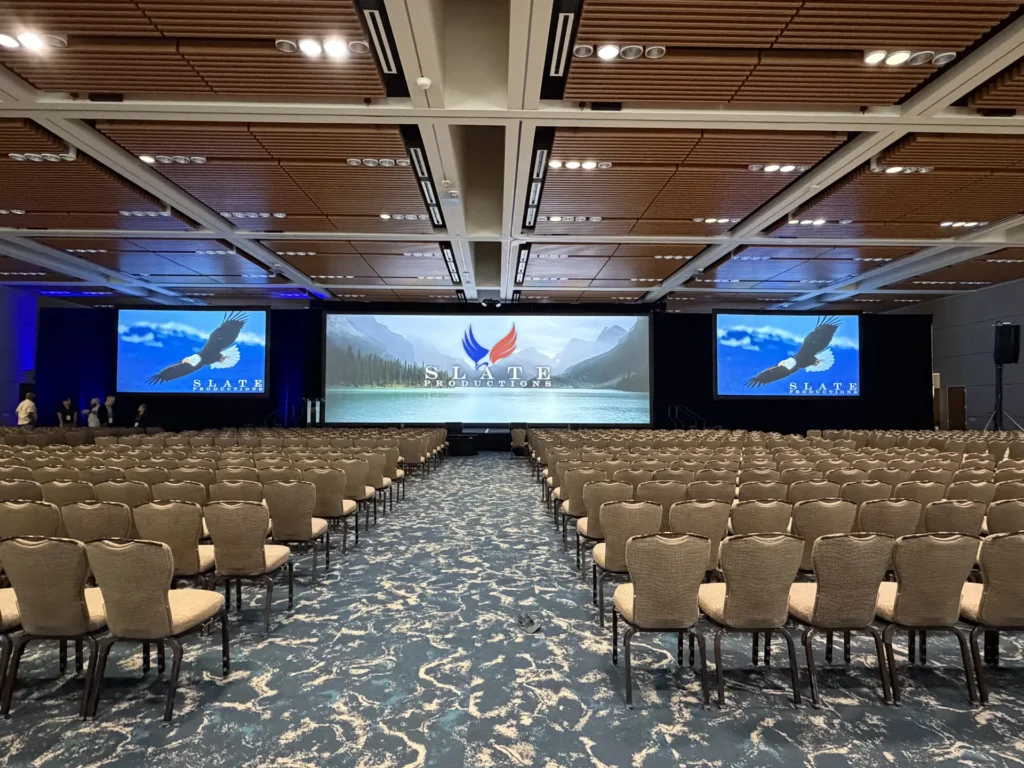

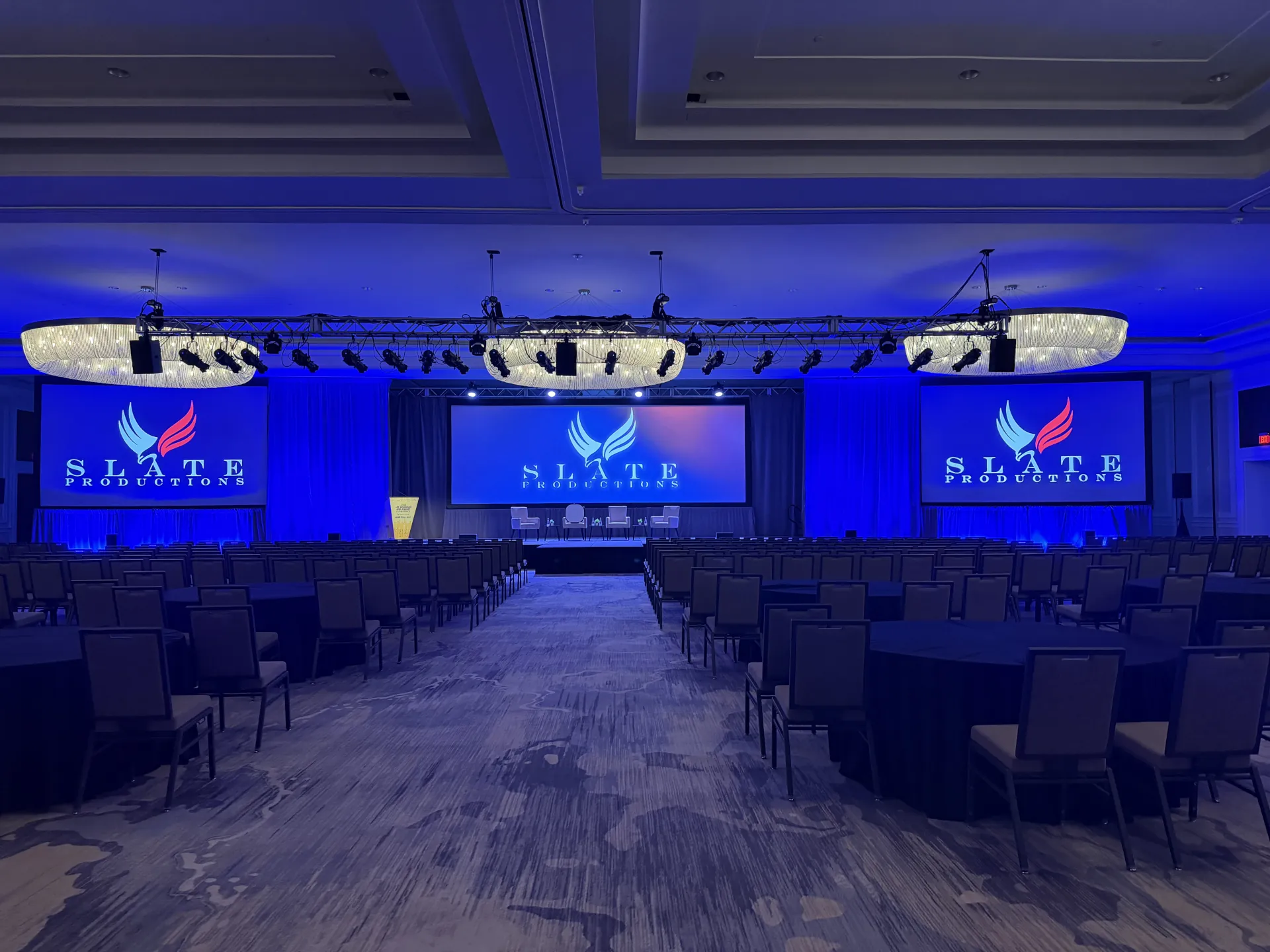
Many of our clients start talking to us about next year’s meeting before this year’s is over, so we can get going on designs. Once the venue is chosen, those conversations can change quite a bit. You don’t have to begin that early, but AV affects more of the meeting than most people expect. It influences which venues will work, how the stage and seating can be laid out and what you’ll spend getting everything in place. Here’s where it helps to have us involved.
Before You Choose the Venue, If Possible
A venue can look great on paper and still work against the production you’re planning. The space may have columns that interrupt sightlines, limited rigging capacity, or a layout that doesn’t fit your stage design. Older buildings sometimes have weight restrictions that affect what can hang overhead or where LED screens can go. When we’re part of the venue search, we can flag those issues while you’re still comparing options, and a site visit can answer questions a floor plan can’t.
If the venue is already booked, bring your production team in as soon as possible. We’ll look at room orientation, stage placement, and attendee seating to figure out what will work in the space you have and what may need to change.
Small Technical Decisions Can Make a Big Difference to the Budget
Rigging, power, internet, and setup all affect what you’ll spend, and those costs aren’t always obvious during venue selection. There’s often more than one way to get the same result. Depending on the design, ground-supported equipment can be more practical than hanging everything from the ceiling. In some venues, running power from a single drop with your AV team’s distribution equipment also costs less than ordering multiple connections around the space.
Working through those choices early shows you where the money needs to go and where there may be a smarter option. When we understand the event and the venue from the start, we can build the production plan around your actual budget instead of having to scale back the design later.
Let the Design Help Choose the Venue
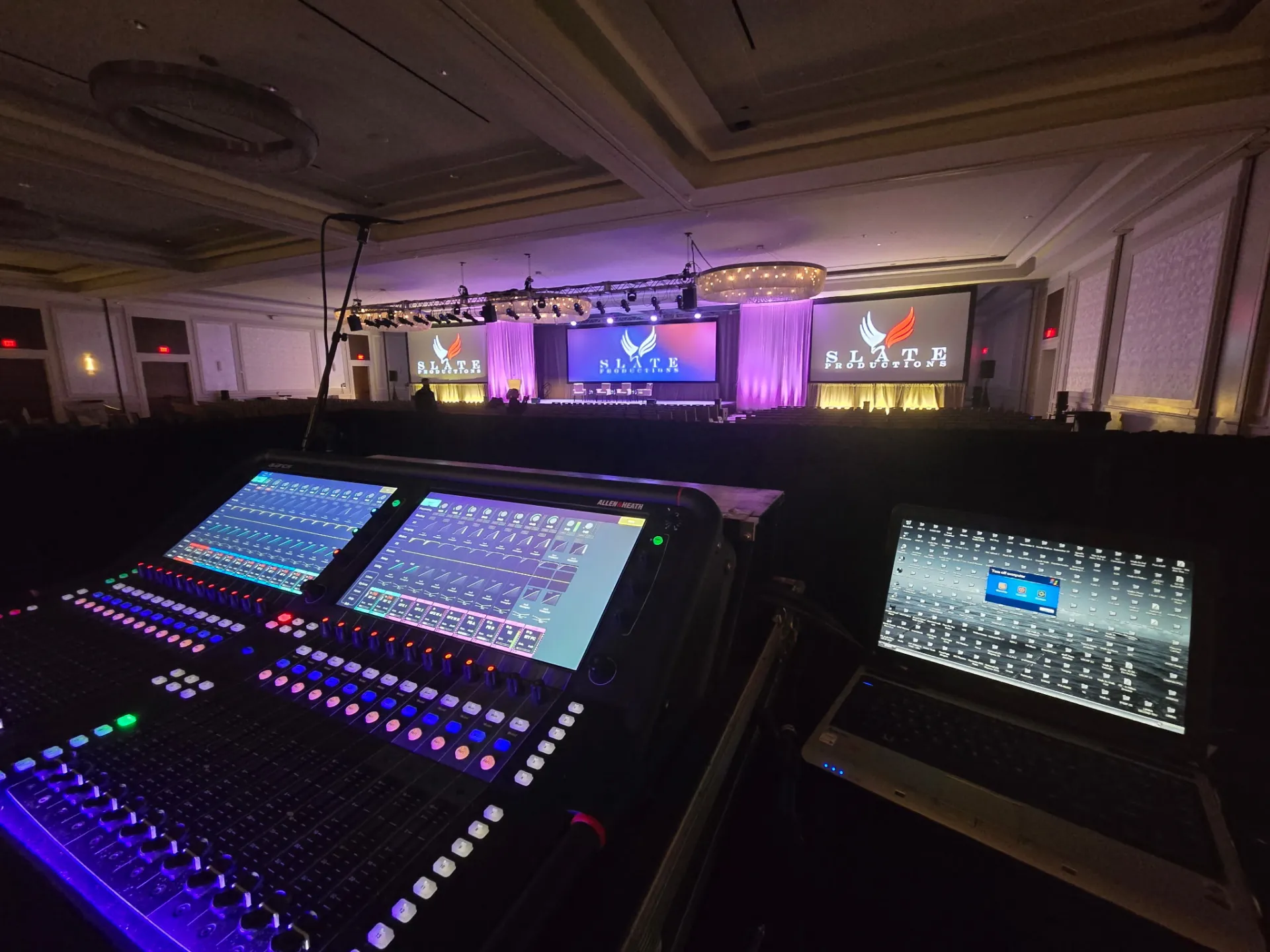
It’s easy to start imagining the stage, screens and lighting before you know what the venue can handle. The space still gets a say in what works, though, and a layout that looks ideal in a venue brochure may need a different stage orientation or screen placement once you account for sightlines, ceiling height and power access.
When we’re involved early, we can work through those decisions with you and get as close as possible to the look you want in the space you’re actually using. That can start with a technical drawing, so you can see how everything fits together before anything is locked in.
Waiting Can Limit Your Options
When production requirements aren’t considered until after the venue is booked, union labor costs or venue restrictions can take a significant share of the budget, and sometimes the original design gets scaled back to make the numbers work.
In other cases, the venue’s rules can make bringing your usual production team too expensive. We may still be able to send a team, including a production manager and technical leads, to oversee the union or in-house crew so you get the experience you’re used to, though that isn’t always practical or the best fit for the event. The show will still happen, but with fewer options than you’d have had earlier in the process.
You Don’t Need Every Answer Before You Call Us
You can start the conversation before you have a finished agenda, an approved stage design or even a confirmed venue, and that’s often when it’s most useful. Tell us what you’re working with, like your dates, the cities you’re considering, roughly how many people are coming and what the budget looks like.
We’ll help you sort out what kind of space you need and which venue terms are worth asking about before you commit. And if you’ve already booked the venue, we can start planning around it.
Frequently Asked Questions About Event Production Planning
When should I hire an AV production company for my event?
Ideally, bring your production team into planning before selecting the venue. They can help evaluate room layouts, technical requirements and potential production costs. If the venue is already booked, involve them as soon as possible.
Should my AV team help with venue selection?
Yes. An experienced production team can identify factors that may not be obvious during a venue tour, including rigging capacity, sightlines, room orientation, electrical requirements and technical restrictions.
Can involving production early help reduce event costs?
It can. Early planning gives your production team time to evaluate options such as ground-supported equipment instead of rigging or using a single power connection with appropriate distribution equipment. The available savings depend on the venue and event requirements.
What if I’ve already signed the venue contract?
You can still bring your production team into planning. They can review the venue’s requirements, assess the room and help develop a production plan around the space and budget. Some options may be more limited once the contract is signed.
Does my production team need a finalized event design to get started?
No. Our production team can help shape the event design as part of the venue selection and budget planning process.
How early should production planning begin for an annual conference?
It depends on the event, but some organizations begin planning their next annual meeting before the current one ends. Starting early gives the production team more time to evaluate venues, develop designs and carry lessons from one event into the next.